Showing posts with label Pakistan. Show all posts

Sunday, December 03, 2023

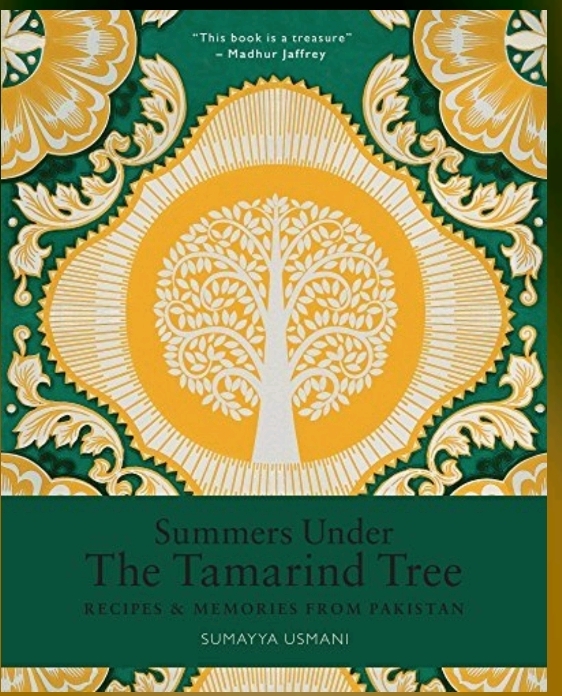
Book Review: SUMMERS UNDER THE TAMARIND TREE


Title: Summers Under the Tamarind Tree  

Author: Sumayya Usmani

Publisher: White Lion Publishing

Pages: 223

My GoodReads Rating: ⭐⭐⭐


Summers Under the Tamarind Tree is a book that you need to get yourself, particularly if you like what is popularly known as ‘desi’ or Indian cooking.


The first thing that caught my eye were the pictures in this book. They captured vignettes of life in Pakistan in glorious colour. They were a reminder of how similar our two nations are and of the common roots we share. They included generic images of life in Pakistan as also family pictures.

Beginning with a bit of family history, the author quickly shifts to talking about the methods of cooking that elevate a dish, and then to sharing the recipes of the dishes that graced her own table.

The author talks about traditional methods of cooking like bhunai, tadka, dum, dhuri (smoking). The latter is guaranteed to raise the flavour of a dish by many notches. Andaza as a way to navigate cooking is commonplace across the Indian subcontinent.

The book is directed at a Western audience and reminds them to learn to play with spice, something cooks and aficionados of the cuisine of the Indian subcontinent know instinctively. Such readers have much to learn from the chapters on spice blends.

The dishes include cholay ka salan (chickpea curry with tomatoes), aloo ki bhujia (spicy potatoes with nigella seeds and fenugreek), khagina (spicy scrambled egg with tomatoes and coriander—in India we call this dish bhurji), sweet semolina halva (with pistachio and rose water) and sabudana kheer (tapioca pearls with coconut and pistachio dust). As far as I was concerned, it read like the description of our staples and favourites.

Then there was bhutta (barbecued corn with chilli and lime), Hyderabadi-style samosas (filled with red onion mint and green chilli), spiced lentil bun kebabs—dishes whose flavours I can endorse from my experience this side of the fence.

There were other delicious dishes that one could have as treats. These included apple pakoras spiced with chaat masala, dahi vadas, shakarkandi (baked sweet potato with chaat masala).

But some things were new to me. The onomatopoeic sounding kat-a-kat (stir-fried and steamed chicken liver and kidneys) and sweet potato and squash parathas.

The bread staples included tandoori roti, naan, puris and makkai ki roti.

The rice recipes included khichdi and mutton pulao, attock chana rijai (minus the chana, this is the brown rice made by our Parsi community), Afghani lamb pulao, saffron rice, meatball and beef pulao.

The meat dishes included coal-smoked Bihari beef kababs, Railway mutton curry, coal smoked lamb keema, Peshawari namkeen gosht, Punjabi aloo gosht, attock chapli kabab, lamb karahi with fennel and coriander, mutton chops. Rose garam masala and Hunter beef were new to me.

The chicken delicacies included Baluchi-style chicken sajji, masaledar batair (spicy stir-friend quail), karahi ginger chicken, Karachi-style chicken tikka, Lahori chargha, chicken makhni handi (with coconut milk and fenugreek), Lahori murgh chholey (chickpea and chicken curry).

I can only imagine how fantastic the flavours of all these dishes would be,

My only grouse was that the book should have been proofread better. Not that you’d notice.

This was one book whose photos alone should make your mouth water. It deserves a place on your kitchen bookshelf.


 (I read this book on NetGalley. Thank you to the author, the publisher and NetGalley.) 

Friday, November 12, 2021

Book Review: THE UPSTAIRS WIFE: AN INTIMATE HISTORY OF PAKISTAN


Title: The Upstairs Wife: An Intimate History of Pakistan

Author: Rafia Zakaria

Publisher: Beacon Press

Pages: 265

My GoodReads Rating: ⭐⭐⭐⭐


This book, with a tagline, An Intimate History of Pakistan, aims to catch one family, the Zakarias, at a moment that is both private and public. It is a moment that pertains to them as a nation, as well as at a deeply personal level.

On December 27, 2007, Benazir Bhutto was assassinated, plunging Pakistan into turmoil and aggravating the chaos in the life of one family. On the same day, the author’s uncle, husband of her father’s sister, Aunt Amina, was rushed into surgery after suffering a sudden stroke. Uncle Sohail survives and Benazir dies. These two events alter the personal history of the Zakarias and the history of the nation respectively.

The assassination of Benazir is the opportunity for the hardliners in Pakistan to take charge, impacting the state of women’s rights in that country.

 But this is not the first time, the personal and the public have come together for the Zakarias. Much earlier in April 1986, Benazir Bhutto had returned to Karachi after a 7-year self-imposed exile, following the imposition of martial law by General Zia-Ul-Haq and the execution of her father, Zulfikar Ali Bhutto.

 Parallelly, one morning in December 1986, Aunt Amina had rushed into the Zakaria home, her life in disarray, with the news that Sohail, frustrated with his wife’s inability to conceive, planned to take on a second wife, one of his colleagues, with whom he had fallen in love. It is the most ordinary of days that enclose tragedy within their sealed lips. Ironically, the second wife isn’t able to conceive either.

The author, a dangler on the edges of adult conversations, as all writers must be, guesses rightly that married women do not spend the night at their maternal home.
 
Sohail adds another floor to the house, moving his first wife upstairs, out of sight, where she becomes a pariah, spying on the happenings below. Aunt Amina is the Upstairs Wife. I felt her pain and sadness. In many ways, it is the pain of the deserving being cheated of their rights.

As one person dies and another survives, author Rafia wonders about the nature of prayer, how their prayers were granted but their fervent prayers, decades ago, that her aunt may conceive were denied.

As the narrative interweaves the past and the present together, we read about the volatile events in Pakistani history as well as the less violent but still momentous events in Aunt Amina’s life. As history unfolds through the eyes of the author as a child, she comes of age, having deeply absorbed and understood the weaknesses, hopes and errors of a fledgling nation.

The family history is intertwined with social and political history. We see the births of the key members of the Zakaria family, from Abdulla, Rafia’s father, to Amina, her aunt, and the family’s immigration to the newly-born Pakistan. Slowly they begin to settle down, trying to live their lives against the backdrop of larger-than-life events such as the division of Pakistan’s West and East, and the wars against India.

Their hope of a better life among Muslims is scuttled as India-born immigrants are viewed with suspicion and hostility. Later as the country vigorously adopts Sharia law and gets increasingly Islamized, we read about how women often get short shrift, how the First Lady was instrumental in forging a law that a Pakistani Muslim man not be allowed to take a second wife without the permission of the first wife.

The events in the book happen in Karachi, in Pakistan, but they might as well have happened in India. The very first sentence tells us about the tendency to leave barred windows ajar, the sounds of children playing, hawkers advertising their wares, car horns blaring, exhaust fumes blending with cooking smells painting a picture of small town and big city life that would be perfectly at home anywhere in India. There were so many cultural resonances despite the different faiths and cultures.

I liked how in their innocence the kids agree that they never liked Uncle Sohail before, but now they hate him.
 

The writing is beautiful, conjuring up a world of images that is at once exotic and familiar. My mother’s wide smiling mouth gathered into an uncertain tightness, as if pulled by a drawstring.

A lane of houses all mismatched in height is described as The awkwardness of a group of mismatched cousins pushed together in a hurried family portrait. 

 Two of the four stars that I have awarded are for the beautiful prose.

But the lack of a cohesiveness that binds the parallel strains gets in the way of us feeling totally invested. The history of the nation and the family are presented simultaneously, but the connection between them is tenuous at best, and sometimes there is no connection at all.


(I read this book on Edelweiss. Thank you to the author, the publisher and Edelweiss.) 


LinkWithin

Related Posts Plugin for WordPress, Blogger...