Showing posts with label Contest entry. Show all posts

Sunday, November 15, 2015

The Good Conductor

We didn’t know his real name, and it didn’t occur to us to ask.

Taklu Conductor was the highly uncomplimentary name that one of the girls gave him. And it stuck. Before long, we were all calling him that. It was a name inspired by his bald pate, taklu being the streetside Bambaiya Hindi word for bald. As smooth as a baby’s bottom his head was, we told ourselves giggling.

He was the conductor on the school bus that took us from home to school and back. Other conductors were indistinguishable, their buses known by a landmark on their routes. Ours proudly went by the name of Taklu Conductor’s bus.

And rightly so, for Taklu Conductor was miles of streets ahead of the others who did the same job.

As a conductor, his duties weren’t all that hard. Maintain law and order in the bus, and assist the driver when he was reversing the bus to ensure that no one was hurt as the bus reversed. But it was the dedication and delight with which he performed these simple tasks that won him hearts.

He took charge of us, ensuring that no one put their hands out through the bars of the window. Fights over who got how much window space, and who had the window seat and who had to make do with the aisle seat didn’t last long either when Taklu Conductor was the mediator. On his watch, girls learned to share window space. Those who sought to push the window panes forward or backward learned soon enough that it didn’t please Taklu Conductor.

Woe betide anybody that dared to tease or belittle any of us girls. Taklu Conductor would be Fury unleashed, an angry father, no less.

With him on board, boring rides on the city streets were transformed as Taklu Conductor regaled us with interesting anecdotes about things that had happened in his village. We marvelled at the different kinds of adventures he had had, the wondrous events that had befallen him. At other times, he led us in singing the latest Bollywood melodies and the oldies with equal felicity, transforming the bus into a great Picnic-on-wheels.

Once an unexpected digging on the roads led the driver to take an unscheduled detour and route to drop us off at our stops. Taklu Conductor fretted non-stop, suggesting alternative routes that would get us home at the earliest. This was pre-cellphone era.

A girl once vomited inside the bus, an action that provoked the wrath of the driver and frightened the girl even more. Taklu Conductor cheerfully offered to clean up the mess, provided the driver shut up and stopped upsetting the girl.

For our sake, he stored in the bus cabin a fully stocked first aid kit, which came in handy, whenever somebody was hurt or whenever somebody attempted acrobatics in the bus.

Many a school girl afraid of her teacher and keen to play hooky changed her mind about bunking school at the thought of missing Taklu Conductor. The girl who did so anyway received a stern lecture on the significance of the education she was receiving, something he never had growing up.

But he was learning. He had a copy of the English primer, probably something his little daughter, who also studied in our school, had outgrown. Taklu Conductor would try to teach himself to read and write with it, with us, his volunteer-teachers, egging him on.

It wasn’t for nothing that we were the envy of our other school mates.

Today when I see my children off at the school bus stop, I am not entirely at ease regarding their safety and I quell my anxious fears through prayer. Back then, none of the parents of the girls on Taklu Conductor’s bus had the slightest doubts or fears about their children’s safety. Taklu Conductor inspired that kind of confidence.

He was a Mother Hen on whose watch nothing untoward could ever befall his wards. A simple man, who had the undisputed affection of all the girls who took his bus.

When I came to know about Tata Motors’ contest, inviting bloggers to talk about a person who has touched their lives, a simple, ordinary person who is #madeofgreat and who touched others with his simplicity and goodness, I was reminded once again of Taklu Conductor.


Today’s school children, and parents too, need more Taklu Conductors on their buses, and in their lives.


If you were touched by my account of Taklu Conductor, and wish to leave a comment, the organisers of this contest would like you to answer a simple question: 

What do you think of Tata Motors' association with Lionel Messi?

The best comment can win you an Amazon voucher worth Rs 750.

So go on, answer the question, and don't forget to say something nice about Taklu Conductor while you're at it. Wherever he is, the Good Conductor has certainly earned every bit of praise he can get.



Saturday, January 31, 2015

Grabbing a Second Chance

I’ve just finished reading and reviewing The First Phone Call from Heaven, and one line from the book is still fresh in my mind. It goes: The mystery of death lies in the moment it chooses. And that helped to remind me of some promises I had made to myself.

Having watched The Bucket List, starring Morgan Freeman, I too made up a bucket list for myself with a staggering and impressive array of things I wanted to do before I died. But then, as often happens, daily demands of life elbowed thoughts of death out of the way. Death can come at any time, and yet we humans live as though we are going to live forever.

After the children were born, I toyed with the idea of getting one important thing done.

1) Making a will: I thought that in the event of my death, I must divide up any assets among those I loved so I could be sure that they were looked after even after I was no longer with them. We Indians regard conversations around the subject of death with morbid distaste. As if talking about it would bring it closer. Would not talking about it put off the eventuality?


There are other things that I need to do, things that I have been putting off for far too long.

2) Publish my book: This has been so long on my to-do list that I am beginning to wonder about my commitment. Surely if this meant anything to me I’d give it more of my time and energy. The book isn’t going to write itself. My dream is calling. Will I answer?

3) Learn to speak Spanish fluently: I’ve got the basics down. I can handle the grammar. I have got the vocabulary in place. I know the websites to go to. I have the books. What I need to do is to get away from the shores and sail out to sea. The longer I persist in thinking in English and translating it into another language, the longer fluency will elude me.


Will I be able to achieve these things this year? I hope so. Life doesn’t always give us Second Chances. And we don’t know when our time will be up.


This post is a part of the #SecondChance activity at BlogAdda in association with MaxLife Insurance”.


Wednesday, March 19, 2014

An online market for Raghurajpur

Time is Money, they say.

I say, it depends on you are.

In 2007, the richest man in India earned Rs 10 per second. That equals Rs 2,59,20,000 over 2592000 seconds. A month, to be precise.

So his time is certainly worth a lot of money.

Now pit that whopping figure against a mere Rs 5000 earned by a humble craftsman in Raghurajpur in Orissa, for a month of back-breaking, wrist-straining, eye-stinging and head-hurting labour. While the villagers, every one of them a skilled artist, are adept at making a variety of handicrafts, the art that has catapulted this humble village to the limelight is Pattachitra.

Pattachitra literally means painting on leaf or cloth. These paintings are made by hand over a large piece of treated cloth. Colourful and intricate images of gods, goddesses and the abundance that is Indian mythology, not to mention the beauty of everyday life, are the hallmark of pattachitra.

Connoisseurs understand the value of these works, understand too the effort that goes into them, the legacy of centuries of tradition and culture that they represent. Unfortunately, while the art itself is celebrated, the humble craftsmen who literally gives up his life for his art, lives and dies neglected, impoverished, struggling to eke out a living.

The beautiful pattachitra paintings are bought from the craftsmen for Rs 5000, then sold for any amount between Rs 10,000-15,000. Ultimately, this buyer, only the middleman, will sell it for Rs 30,000 or Rs 40,000, an amount of money that the artist will have to slog six-seven months to earn.

Every stroke requires masterful accomplishment. Despite the lack of training, the art has been meticulously passed down the generations. In today’s age, however, few would wish this kind of a life upon their children. Any wonder then that many of the most crucial elements of our fine arts heritage are dying out.

If there is anything that has sustained the artistic tradition, it is no thanks to us. Much as we pride ourselves on belonging to a nation whose artistic and cultural tradition dates back thousands of years, we have not done anything to drive awareness about the plight of these artisans.

It is not easy for artists with no financial backing, to continue to battle obstacles in the struggle to keep their art and families alive.

Orissa has been unfortunate in not having benefited from the wave of development and progress that has enveloped other parts of the country.

These artists need support. Our support, if we would but give it.

Now Tata Capital has embarked on its Half Stories campaign. Stories of unfulfilled dreams, of deadends in the way of life’s journeys. Photographer Pankaj has been scouring the expanse of India, looking for stories to complete, using the power of crowd sourcing.

The fifth stop in the Half Stories journey, Tata Capital has hit upon the novel idea of designing, creating and establishing a website for the artisans. One that they can learn to manage themselves.

A website would take the Raghurajpur story to the world, to people who appreciate beauty. People who would value the hard work of the artist who spends his time and energy in creating something beautiful.

A website would bring in customers, prospective and current ones, face to face with the artists. It would foster a greater degree of appreciation for the craftsmen, ensure customization of art objects for the buyer and a steady amount of work for the artists.

A website can make it possible for the customer to meet the artists, without the middle man clogging the exchange.

Let’s make this website a reality for the artists of Raghurajpur and keep the pattachitra tradition alive.

Tata Capital's efforts have already yielded the amount required to build the website.


Now it is up to us to create awareness about this so that the artists can be assured of lucrative work once the website comes into being.


(This post was written for the Half Stories campaign held in association with Indiblogger.)


Wednesday, February 19, 2014

Twinkle, Twinkle, Little Star

I surveyed our Christmas crib with satisfaction.

Dad, ever the DIY-type, had crafted a stable and a manger out of some leftover wood. Hay, stitched together, made up the thatched roof. We had strewn sawdust on the floor to simulate the desert of the Holy Land. In this humble setting, we placed the figures of the Nativity.


Wheat grass, cultivated days before, made up the foliage. A large sheet of paper painted blue with many silver dots and one golden star made up the skyline.

I thought we had done an awesome job. And yet our crib did not make it to the shortlist for the Christmas crib competition. The judges said it lacked authenticity. They gushed over someone else’s, and said it looked “sooo real.” Ours would too, I promised myself.

Mentally stripping our crib down to the parts of its whole, I diagnosed just where our crib fell short of realism. It was the skyline. It didn’t look real. It was just varying shades of blue -- cobalt, Prussian, navy and indigo, merging together, the silver dots, masquerading as distant stars, and the golden star leading the wise men to the stable. We needed real stars, I decided.

I didn’t know how to catch a falling star and the desire hung amorphously in my mind. The following April we headed to our hometown in Goa for our summer holidays. On one of our trips to the numerous beaches that dot Goa’s coastline, I chanced upon the answers to my need. There they lay along the shore. So many starfish that my eyes widened in surprise.

Excitement coursed through my veins. I touched one of them gingerly. Tentatively. It wriggled slightly beneath my fingers. Then stayed put. I looked around. My cousins and brothers were all busy having fun, laughing uproariously as they tried to ride the waves. My mother and aunt were sitting on the shore under the benign shade of some coconut trees, guarding our picnic lunch and flip-flops.

Suddenly I felt deliciously conspiratorial. I had to find a place to stow the starfish, without anyone seeing me. The idea of having starfish stand by for stars was so ingenious, I didn’t want anyone else in the world having it, not even my cousins. And I wanted the judges’ jaws to drop when they saw our Bethlehem skyline.

Running towards my mom, I peered in the bag containing our lunch and took out an empty polythene bag. Back to the beach I raced, my feet tripping quickly across the hot sand. Bending down, I picked about ten starfish and dropped them in the bag. Once we got back to my uncle’s house, I put the starfish in a Mackintosh chocolates tin, and slid the tin in the dusty darkness behind an old cupboard.

We wouldn’t return to Bombay until mid-June. There was plenty of time to pack my prized find in my suitcase. My heart at ease, I enjoyed my holidays.

Until they turned their noses up, wondering about the smell of dried fish. Had tom hidden a dead rat somewhere?

The holidays became dreary. I longed for school.

No one owned up.

Dad noticed the air of despondency. And the story tumbled out. He didn’t say a word about selfishness or greed or the loss of life. And yet how keenly I felt his unspoken disappointment.

The starfish were buried in the backyard. No one else cried.


The new judges that Christmas thought our crib looked refreshingly simple. I thought of those starfish then.

I still carry that dead weight.


Being eight is no excuse.


(This post has been written for the Weekly Challenge at Yeah Write.)


Tuesday, January 07, 2014

A Murine Love Story

There was a loud crash in the hallway.

The carriage burst in just as the grandfather clock in the parlour announced the hour of midnight

At the twelfth sounding of the gong, the spell came apart.

The white-liveried coachman became a cat and the five white horses her litter of kittens. 

The grand carriage went back to being a pumpkin. 

The bejewelled gown gave way to one of Cinderella’s stepsisters’ old cast-off dresses, complete with the grease stains that came from cooking the day’s supper and the grime from scrubbing the floors. 

I, Raton, only lately a high-heeled glass slipper, too assumed my natural form.

Within seconds, we scampered away to the safety of the scullery that Cinderella called home. Except the pumpkin, which Cinderella had to carry in her arms.

Pumpkins don’t scamper. Not even in fairy tales.

By the time the old harridan, Cinderella’s stepmother, showed up, the house was as quiet as, what is that phrase? As quiet as a mouse.

Silly phrase if you ask me. I am a mouse, but I was far from feeling quiet.

I had realised that Chuhiya, my love, was nowhere to be seen. How careless of Cinderella to lose her!

We had both been transformed into her glass slippers. Our services had enabled the Fairy Godmother to deck Cinderella out so finely. All she had to do was to return home before midnight. Was that so hard to do?

The outcome of all that Abracadabra had been good for Cinderella. She’d had a chance to waltz the night away with the Prince.

The cat family had had a good time too. What is that they say? A cat may look at a king.

And the pumpkin had come home in one piece.

But what about me? I had lost my love and I hadn’t even told her that I loved her. 


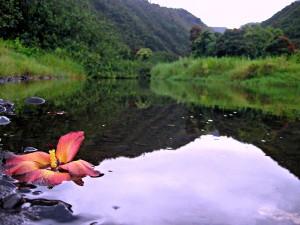
Meanwhile, the one who had blighted my happiness snored gently on the scullery floor, no doubt dreaming about strolling with the Prince around some scenic pond, with maybe a lone, beautiful hibiscus flower serenely floating over the still water.


Hibiscus


What a stupid dream! I would have dreamed about Chuhiya and me feasting on the garbage.

But that was not to be. Here I was, writhing in helpless misery, while Chuhiya was trapped in the palace? I was too agitated to think about what state she might be in.

I hoped she was still a glass slipper. The thought of her regaining her true self only to be stamped underfoot or be snared in a trap was horrifying.

It was a long, dark night for me.

*      *       *
  
The next morning, I overheard the harridan telling her daughters that the Prince had fallen in love with a glass slipper and was visiting every household in the kingdom in order to find the foot that had worn that slipper. And marry it too (The whole person, not just the foot. This language will be the death of me.).

My heart skipped a beat. I breathed a sigh of relief.

Chuhiya was alive, though trapped in a glass slipper. How would I rescue her? I had no idea. What were the odds that no other foot but Cinderella’s would fit the slipper?

All day the house was abuzz with excitement. Cinderella cooked and washed and cleaned, but there was something different about her.

I recognized the feeling. Like me, she was infected with hope.

At long last, the royal entourage showed up at our doorstep. The harridan’s two daughters tried their hand at wearing the slipper (Or should I say, tried their foot?). But neither had any luck. Desperate, the harridan tried to shove her foot in. But she had no luck either.

I was on the verge of a nervous breakdown by now.

And then the Prince wanted to know if there were others in the household. Only the maid, he was told. At the Prince’s insistence, Cinderella was summoned and ordered to try the slipper.

It was a delicate moment. Our fates hung in the balance.

In a moment, the Prince vowed eternal love to Cinderella. But what of my love?

Was I destined to prowl the trash alone? My Chuhiya entrapped in a glass slipper until the end of time?

Dejected, I shut my eyes.

The grandfather clock began sounding the hour of 12 noon. At the twelfth sounding of the gong, I heard them scream.

A shrill and horrible sound…broken by the mellifluous squeaking of my Chuhiya.


(There are numerous versions of the classic Cinderella story. I wrote this story, my own original variation, for Yeah Write # 143. Incidentally, Raton and Chuhiya are Spanish and Hindi for mouse.)


Bagging a Lesson

Generally, I spend New Year’s Day, thinking of resolutions.
This year I spent it cleaning up my cupboard. It was an activity I’d been putting off for long.
Going through my cupboard, I realized just how much stuff I had gathered. Items that had attached themselves to me, things that I’d once taken a fancy to, and forgotten about. Things that I couldn’t throw away. What if I needed them the day after I threw them out?

With the Husband watching me, his hawk eye on high alert to make sure that the to-be-discarded items didn’t claw their way back in, I had no choice but to spring clean as if I really meant it.

And then I found a bag that my younger brother, M, had bought me from London. It was his first trip abroad and I was touched that he would think of me.

The bag was large, roomy, and voluminous. I could have carried my entire world in it.

When I first laid my eyes upon it, it shone. Bright. Glossy. Burnished to perfection. The two bag straps were made of three long strips of faux leather interlaced together to resemble thick braids.

That bag was a thing of beauty. Had there been a beauty pageant for large roomy bags, mine would have won, without having to make a speech about world poverty.

It was so chic and stately, I couldn’t bring myself to dilute its appeal by treating it as just another bag. There had to be a right occasion that would allow it to exhibit its exquisiteness.

Until that right occasion showed up, it would stay in storage, biding its time, like a debutante waiting to be properly introduced into Society.

I packed the bag in a polythene bag, and placed it in the cupboard, and forgot about it. For months it lay there, as life and its compulsions overtook me.

When M asked me whether I liked the bag, I told him that I loved it. It was the truth. When he asked me why I didn’t use it, I told him that I was waiting for the right occasion to flaunt it.

An occasion did present itself, along the way. But it wasn’t of the scale of grandeur that would befit the bag. Or so I thought. So I let it lie.
This New Year’s Day, I unwrapped the polythene covering, to have a look at my priceless possession. 

Shedding bits of skin, it looked wasted and sickly.

For a desperate moment, I wondered if I could still carry the bag around. What if I held the damaged side close to my body? But that was not the solution. The bag was once a thing of beauty. I could not subject it to a life of shame, as if it, not I, were to blame for its mottled, moulted skin.

I emptied the rich mahogany shavings of bag skin into the trash can, and gazed at the bag.

At my request, the Husband took a picture of the bag. 


I needed a reminder to live in the here and now, not to wait for some ephemeral date in the future when I would relish life. I needed a wake-up call to use what I had, things, talents, abilities.

Who knows how much time we have left?

The stuff we have must be used or else it will be ruined.

Our physical and mental abilities must be nurtured or else they will atrophy.

Even when it was unusable, that bag taught me a lesson.

I just hope I remember the lesson through 2014.


(This post has been written for the Weekly Challenge at Yeah Write.)


Friday, December 27, 2013

Five gifts for my children

As parents, we make it our life’s mission to give our children the best that our purses and imaginations can conjure.


Nothing less than the best will do for our children, we tell ourselves. So fierce is our love for our children that it seems to consume us, making every other priority of our lives shrink in comparison.


We make spoken and unspoken promises to ourselves, regarding the sort of care we will give our offspring. We will give them the best to help them soar, to realise their potential and to enable them to hold their own in a world that, unfortunately, will not view them with the high regard that we do.


We get so fixated on our desire to give them the best that money can buy, we often overlook the need to give them the things that money cannot.


We get so carried away in our desire to give them the things that we didn’t have when we were growing up, we forget to give them the things that we did have growing up.


I’m not a great one for buying toys for my children. Having grown up in a SITK (Single Income Three Kids) family where the budget was often stretched thin, I have learned to regard thrift as a virtue. Reduce, reuse and recycle are not just some catchy mantras for me. They are credos by which I live my life. Credos that I seek to inculcate in my children.


Most of the gifting I do happens in honour of my kids’ birthdays. Of course, I do buy them things on impulse, things that I think they might like. Mostly clothes or books, or even small clips, crayons and drawing and colouring books and odds and ends that might inspire them with a sense of novelty.


But whenever the thought of gifting them something arises, both the Husband and I like to think big. Beyond a Made-in-China toy that might not live to see the morrow. Or an expensive gadget or remote controlled toy, for that matter.


A very famous quote, attributed to more than one person, goes: “There are only two lasting bequests we can give our children. One of these is roots, and the other, wings.”


This quote has had a profound influence on me. It has become the philosophy that colours my choice of gifts for my children. I believe that every big gift that we buy for our kids should make a substantial investment in their lives, and should give strength either to their wings or their roots.


Here are the five gifts that I would like to give my two children, known on my blog as La Niña and El Niño. 


1)  The most immediate gift I would like to give them is the gift of my TIME and PRESENCE. As children, my brothers and I were fortunate enough to have parents who were fully invested in our lives. They were interested in the small and big events of our lives, and were always willing to listen and talk to us about the profundities and inanities that occupied our minds. Their deep involvement in our lives and their unconditional love and acceptance have touched me deeply.


Children live in the here and now. They are too young to remember the past, or care about the future. They long to have their parents play a more active, vital and participative role in their lives. One that goes beyond buying them the basic necessaries and hoping they will amuse themselves with some trinkets and gadgets while the grownups go chasing after the items on their own to-do lists.


The way I play a more active role in my kids’ lives is by paying attention to them, by answering them every time they call me, by making time for them, switching off the TV and the computer and setting aside the mobile phone, each time they clamour for their Mamma to play with them.


   2)  The ability to LEARN and KEEP LEARNING would be my second gift for them. I wish my children to always want to learn, to know more, to drink in, with wide, greedy gulps, of the vast reservoir of knowledge that humankind has accumulated so far. But I would also wish them to realise that not all the learning happens in a classroom or a school. The most ordinary, unspectacular people can enhance our learning, if we learn to keep our eyes and ears open and our mouths shut.


As WB Yeats said, Education is not the filling of a pail but the lighting of a fire. As a parent, I feel bound to teach them to consider themselves students of life and living as long as they are alive.


I would also like to equip them with the means to learn some skills of their own choice. Whether they choose to learn sewing, dancing, playing a musical instrument, baking, designing, swimming, cooking, painting, building or some form of martial arts etc, no learning is wasted. Every new skill can do wonders to an individual’s sense of self-discovery and ability.


    3)  The next treasure in my basket of gifts would be my BOOKS. My father introduced me to the world of books and instilled in me a love for reading. It was a love that opened my world view, and broadened my horizons. It gave me hours of sheer unbridled joy, and helped me to forget all my cares. It helped me learn from minds wiser than my own, and taught me to love the magic of words. It is a treasure that I have always sought to share with my children.


My books are some of my most valuable possessions. Many of these books I received from Dad. Over time, I have added to my collection. Always the kind of books I would want to read and re-read. The kind that expanded my mind and my heart and enriched my soul. I hope to share my small library with my children.


4)  The other gift that I would like to leave my children is one whose worth will be evident to them when I am no longer with them. I would like to make a WILL, so that, having sorted out all my assets, I am able to leave my tangible and intangible possessions to the two little people whose welfare is and always will be my greatest concern.


5)   The greatest gift that I would like to leave my children is a twin one. It consists of the MORAL VALUES that I learned from my parents and the FAITH in a loving God that they instilled in me.


The values can serve as a compass for a good life, helping them navigate the pitfalls that threaten impressionable youngsters. The faith can be the light that helps see them through the toughest times.


Living a life with faith is no guarantee for an easy life. It will not give them the assurance of having all the answers. 


What it will offer them is the assurance that things will work out alright, and that the doubts that rage in their minds will be stilled in time, if only they are willing to let go and let God.


I hope to be able to share with them my deep conviction that everything will work for good, if they allow themselves to move on meanwhile. To do the chores and the jobs that need to be done, while waiting for the answers to reveal themselves. And they always do.


These are the gifts that I would like to leave them.


Everything else is only pretty wrapping paper.


This post is a part of the 1001 Gifts Activity by HDFC Life in association with BlogAdda


Thursday, November 21, 2013

My Babies Strongest

A baby is the purest being, the only one that qualifies to be called an angel by virtue of its very existence. Babies epitomise innocence. They are as God made them, unmarred by sin, unstained by artifice.


As parents, we are overwhelmed by the responsibility of bringing up our children right, even as we feel ourselves consumed by our love for them. We promise ourselves that no matter what other milestones we may or may not clock in life, no matter what goals we may or may not tick off our bucket lists, this bringing-up-baby business is something we will get right, even if we have to spend our whole life doing it.


Before the birth of La Niña, I attended a breastfeeding class at the maternity hospital at which I had registered to give birth. The lecture was organised by the Breastfeeding Promotion Network of India (BPNI). The lecturer emphasised the importance of breastfeeding, the most basic nutrition for babies in a practice that dates back to the dawn of civilisation.


Having written an article on the subject of breastfeeding for the first magazine I worked for, I was aware about the benefits of breastfeeding for the baby. But the lecturer opened our eyes to the benefits of breastfeeding for the mother too. I was a willing student, and hung on to every word that she spoke. Her words resonated within me, and gave life to a resolve that I had not yet encapsulated in words. There and then I decided that I would breastfeed my baby exclusively for six months. I would be her primary source of nourishment and nutrition. My body would assuage baby’s hunger pangs and thirst. My milk would be the blood that flowed in her veins.


It was a resolve that gave me many sleepless nights. Well wishers who came to see the baby over the next few weeks chided me for what they referred to as “irrational” behaviour on my part. They told me that they had formula fed their children in their time, and that their kids had suffered no harm as a result.


Others told me that while I may choose to indulge myself in the day by breastfeeding her, I should formula feed her at night to ensure that she slept well, thereby affording me a good night’s rest too. The unspoken assertion was that in refusing to formula feed her at night, I was disturbing my wee one’s slumber by not slaking her hunger pangs effectively.


The logic was incorrect. The truth is that breast milk is easily digested, causing babies to wake up and cry for more, whereas formula, being hard to digest, induces a longer period of rest.


It was not a line of reasoning that appealed to me. I was prepared to sacrifice my sleep even if she woke up three times each night for her feeds and kept me up for 45 minutes each time. I was determined to breast feed on demand, no matter how often the demand was made.


My maternity leave exhausted itself four months after La Niña was born. I was forced to resume full-time work, a fact that challenged my decision to breastfeed her exclusively for the first six months of her life.


A quick phone call to the BPNI lady showed me the way to continue breastfeeding even as I fulfilled my duties at work. The lady instructed me in the right way to express, store and transport breast milk. It was a huge commitment on my part, but I could not have done it without the cooperation of my in-laws who looked after La Niña with intense dedication, and my boss, who let me excuse myself thrice a day, for 30 minutes each time, so I could express milk for my baby.


I had told my boss that I would need to take time off for expressing milk only for two months, until La Nina turned six months old, but she encouraged me to do it for as long as I wanted for the benefit of my child. For the next five months, I was always lugging an array of small steel containers in which to express the milk, besides an icebox in which I stored the steel containers. It was inconvenient, but the positive implications of my actions were quickly evident.


Thrice a day, I would go to a spare room in my office clinic, and there amid the sterile and spartan surroundings, I would express milk for my child in the steel containers. I would store these containers in the fridge during the day, then get some ice from the office canteen for my icebox, and carry the steel containers containing my ‘liquid gold’ home. 


Once home, I would sterilise six steel katoris, by washing them well and drying them over the heat of the gas burner, the way the BPNI lady had taught me. I would then pour the milk from the steel containers into these katoris.


The following day, my in-laws would pull out one of these containers about 15 minutes before La Niña’s feeding time, and warm the milk by keeping the containers in hot water. Breast milk should never be microwaved or heated on the gas. La Niña’s indulgent grandparents would then feed her the milk using a spoon.


We had already decided against using feeding bottles for a number of reasons. The plastic is never 100 per cent safe, nor is the silicon nipple. Nor does extensive boiling of the feeding bottle apparatus make it as clean and safe as breast milk.


Having observed the power of breastfeeding firsthand, I was doubly motivated to do the same for El Niño. Today La Niña is five years of age, while El Niño is two-and-a-half. Our paediatrician’s file for both kids consists of no more than 5-6 sheets. Almost 90 percent of our visits to the doctor have been to get the kids their vaccination shots. On the rare occasion that the kids have fallen ill, as a result of a sudden change in the weather etc, I have observed with gratitude that both of them have recovered within a day or two. Another pleasant byproduct of the fewer doctor visits is that their immune systems have not been forced to endure doses of antibiotics.


I have seen many kids falling prey to infection after infection, their parents forced to take time off from work once too often. The Husband and I have almost never had to take time off to take the children to the doctor.


I have now become something of a breastfeeding evangelist. Whenever I espy a pregnant woman on the train or bus, I gingerly and tentatively bring up my own experiences, and if she seems receptive, I let her know about the many positive effects of exclusive breastfeeding for both mother and child. I tell her of the physical, mental and social development of the child, of the strengthening of the child’s immunity, a gift that lasts almost all through life.


With my breastfeeding efforts having yielded such great results, I was determined to ensure that the effects of the immunity did not wear off. My father had introduced me to the benefits of eating amla, and I sought to share this treat with my children. They didn’t take to it with the same gusto though, so I learned to make amla candy. Now they can enjoy the benefits of eating amla all the year round.


I haven’t stopped at that in my endeavour to boost their immunity. When they stopped being covered by the all-encompassing power of mother’s milk, I introduced them to Dabur Chyawanprash. Fortunately, it wasn’t an acquired taste. Having seen me and their paternal grandparents enjoying a spoon of this mixture every once in a while with obvious relish, they too began demanding a tablespoon of the same.


The first time they tasted it, the expression on their faces underwent a radical roller-coaster upheaval. But they soon took to this part-sweet, part-spicy taste. They are the only kids I have ever seen that lick the Chyawanprash spoon clean with the concentration that most other children reserve for lollipops.


I also make sure that my children eat enough servings of fruits and vegetables and dry fruits every day, that they play around and sleep well too.


When it comes to boosting the body’s natural defence mechanisms, mothers must ensure that nothing is left undone.


My kids are healthy and well.


What more can a mother ask for?


Wednesday, November 06, 2013

Staying Safe in My City

I am old enough to remember when my city was called Bombay. I was young then, and my city was a safe place. People said that this vibrant place where Hindus, Muslims, Christians and Parsis lived together was the best. 


People could travel home at late hours of the night and still arrive home safe. Women could come home late and not fear for their lives or their virtue (how quaint that word sounds!). Neighbours swapped sweets at festivals, and shared one another’s joys and sorrows. They watched over kids and everything felt safe.


It isn’t like that anymore. It hasn’t been like that for years now.


As a woman, I’ve learned to look over my shoulder when I walk. I’ve learned to watch the shadows that fall on the street beside me to see whether they are lengthening or shortening, depending upon the time of the day. I’ve learned to be wary of people, of strange things.


It ought not to be like that. I long for those days of innocence. When the world felt safe. There were bad things happening, but they seemed to leave us unscathed. Now danger hovers near.


I fear for my children, for my dear ones, for myself.


And I realize that if anything can save us now and again, it is the rule of Safety First and Always.


So here are my 10 Suraksha tips for staying safe in Bombay.


Pity I have to call it Mumbai now.


1)  Listen to your gut: Your instinct. Intuition. Women are blessed with the sixth sense. That inner voice which knows without knowing it knows, long before our conscious selves do, that all is not well, that there is danger in the air. We are all blessed with a Spidey sense that tingles. If only more of us would listen to it! 


Not all danger announces itself through tell tale signs, but there are a lot of times that it does. If someone or something makes you uncomfortable, be warned. If we only listened to our gut telling us not to trust certain people or to flee from certain places, it would bail us out of a heap of trouble.

2)  Verify, verify, verify: Make sure that the antecedents of your domestic staff, including cooks, maids, drivers etc are verified. Keep a current photograph of your domestic staff members with you and have them registered at the local police station. Get proof of their residence.

3)  Stay alert: When you walk on the street, make sure that your senses are alert. In the moment. Don’t talk on the mobile. And don’t listen to music. Whether the phone is glued to your ears or whether you have the hands-free earphones on -- both are bad ideas. You need your ears and your wits about you on the street. Whether it is to see the rickshaw, car or bus hurtling down towards you or whether to see that suspicious person rushing towards you with malicious intent. Suddenly rummaging in the innards of your voluminous handbag for a key, lipstick or equally insignificant something is also a bad idea.


Whether you are at home or in a hotel, it is best to be on your guard. Don’t open the door until you see who the person outside is. Have a safety door set up. Once you are indoors, make sure you bolt the door well as soon as you enter. Don’t leave the balcony door open. Or the window, for that matter, if there is no grill fixed on it. When staying at a hotel, don’t take off the “DO NOT DISTURB” sign even if you are going out for a while.

4)  In the driver’s seat: When you are driving, peer into the backseat before entering the car. Get into the car and lock it, before driving away. As far as possible, take known routes. Taking the road less travelled is a good idea when you are speaking figuratively, but not when you are being literal, and certainly not in the late evening or at night. Also as far as possible, stay in public spaces. Park in a parking lot that is easily accessible, not in a lonely area. By the same token, basement parking lots are a no-no. And have a trustworthy person walk you to your car, particularly when it gets dark. Never mind those sneers about how paranoid you are.


5)  Use your mobile phone well: Keep the phone numbers of family members, close friends and colleagues saved on speed dial. It is also a good idea to keep the numbers of women’s helplines handy. Apps like Smart Suraksha are a useful weapon to stock in your arsenal. Download it and use it when required. When you get into a taxi or an autorickshaw late at night, call a close family member or friend and tell them the licence plate number.

6)  On the commute: When travelling by local train at night, get into a bogie that’s meant for women alone for 24 hours. One of the women’s bogies on the Western and Central Railway lines turns into a general compartment at night. I have seen men rushing into those bogies past 10.30 pm. When travelling by BEST buses, make a big noise, if someone tries to grope you. Move away and sit next to women. 


Avoid travelling in an empty train or bus, at night. If you need to travel to Bandra by train at night, don’t get into a Bandra local. Get into a Borivali or Virar local, so there will be other people in the train with you. Also, avoid wearing flashy gold jewelery, unless you are Bappi Lahiri. When travelling alone, make sure you aren’t wearing a tight skirt or heels, so that you can run if you have to.


7)  On a night out: Go out only with people you trust. But don’t accept food or a drink from a stranger, no matter how handsome he looks and how charming he acts. Don’t leave your drink unattended. Watch it at all times. Take it to the bathroom, if need be. Make sure the drink is made in your presence. Failing that, drink only that which comes out of a sealed can or bottle. Also, make sure that at least one of your friends stays sober so he/she can drive you home.

8)  Save yourself: When in trouble, fight tooth and nail. Lash out at your attacker, but don’t flail around randomly. Hit him where it hurts, on areas where he is most vulnerable. For example, the eyes, the groin, the throat. Use those manicured nails to scratch his face. 


Bite. Claw. Jab. Stab. Thrust. Poke. 


It might incapacitate him for a brief spell, but at least it will give you time to run. Also, when you flee, take care to stay in crowded places, so you can lose the attacker. Don’t ever run into deserted alleys.

9)  Steel your mind: This is easier said than done, but it must be said. Don’t allow the attacker to know that you are afraid. Fear is natural, of course. I am filled with fear at the very thought of being accosted by an anti-social element.


But allowing the attacker to see your fear is the equivalent of losing the battle before it has begun. He will relish scaring you further, toying with you as a man-eater plays with its prey before tearing it to bits. Tell yourself that you will not allow yourself to be a victim. When you walk on the street, walk confidently with your head high. Don’t look frightened, even if you are. If someone accidentally brushes you on the street, don’t let yourself feel a sense of shame. Turn around and shout at the person.

10)  Be Cybersafe: Don’t let your FB friends in on every little sneeze and cough in your life. Especially don’t tell the whole world that you are going out on a vacation with your family. The information tells thieves that your house is unoccupied. As far as possible, avoid sharing personal information on social media. Nothing is private, as far as FB and Twitter are concerned.


Stay safe. 


I am sharing my Smart Suraksha Tips at BlogAdda.com in association with Smart Suraksha App.


LinkWithin

Related Posts Plugin for WordPress, Blogger...